Too Much Weight at the Hubbard Scales
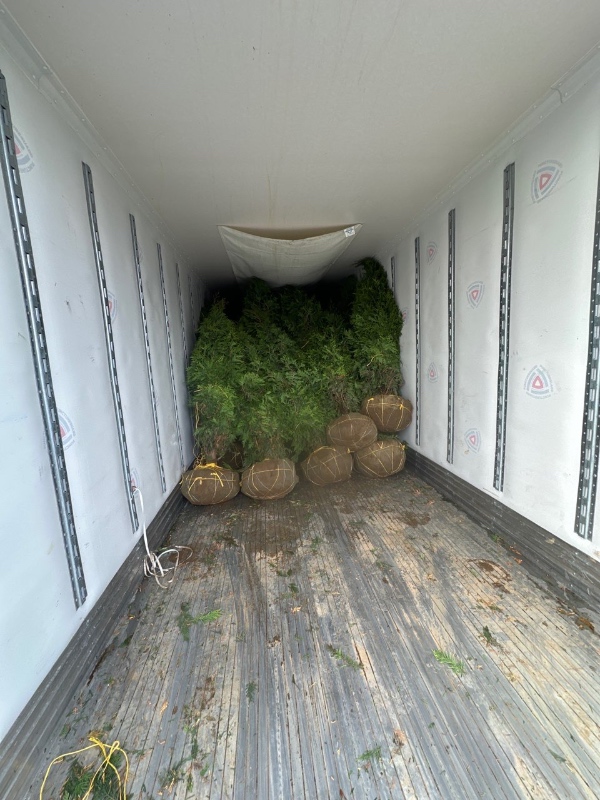
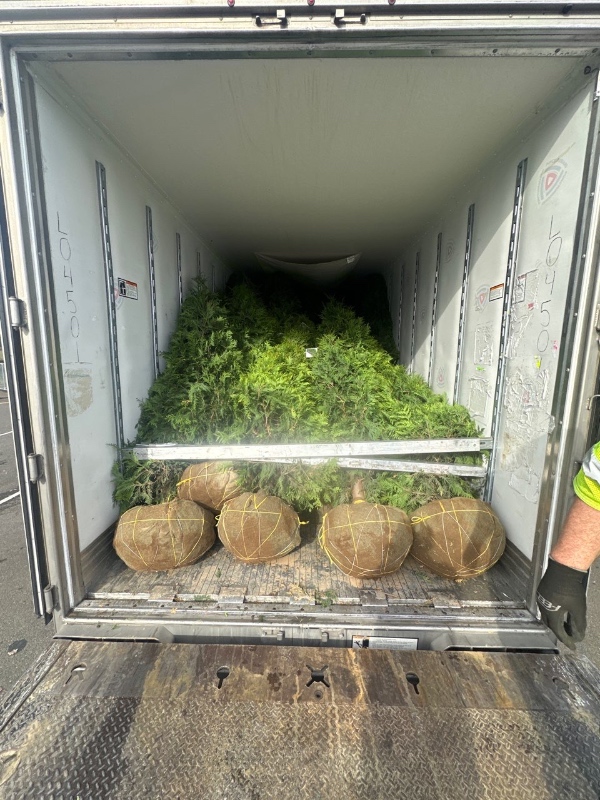
Early in the afternoon, we received a call about a truck stopped at the southbound Hubbard Port of Entry scales on Interstate 5. The Oregon DOT scale operators had flagged the trailer because it carried too much weight. The load consisted of living trees with full root balls, and the trailer simply carried more than it should. Situations like this often lead to a request for I-5 commercial towing, and we headed out right away to take care of the issue.
The truck had transported the trees toward the scales, but the weight created a problem that needed attention before the vehicle could continue. With several thousand pounds too much on the trailer, the driver had no choice but to reduce the load and arrange transportation back to the shipper in Gervais. Our team arrived ready to sort out the situation and get the road compliant again.
Assessing the Situation at the Hubbard Scales
At the southbound Hubbard Port of Entry on I-5, Oregon DOT staff had already pulled the truck aside for inspection. The load of living trees with large root balls added too much weight, and the trailer exceeded axle limits. Oscar and Jim assessed the situation, confirmed the need for overweight load assistance, and arranged to remove part of the cargo so the trailer could meet scale requirements.
Preparing the Equipment
We sent two pieces of equipment to handle the job. Our flatbed truck served as the transport vehicle for the trees we needed to remove. Wheel lift unit number 224 handled the pulling and positioning work.
Oscar and Jim set up the operation with a clear plan. They used the wheel lift to begin pulling the trees off the overloaded trailer. Each tree came off carefully so the root ball remained intact and the cargo stayed in good condition during the transfer.
The work involved what many drivers describe as overloaded trailer recovery. With large root balls and heavy soil attached, each tree carried far more weight than a typical load of landscaping materials.
Moving Trees Off the Trailer and Back to the Shipper
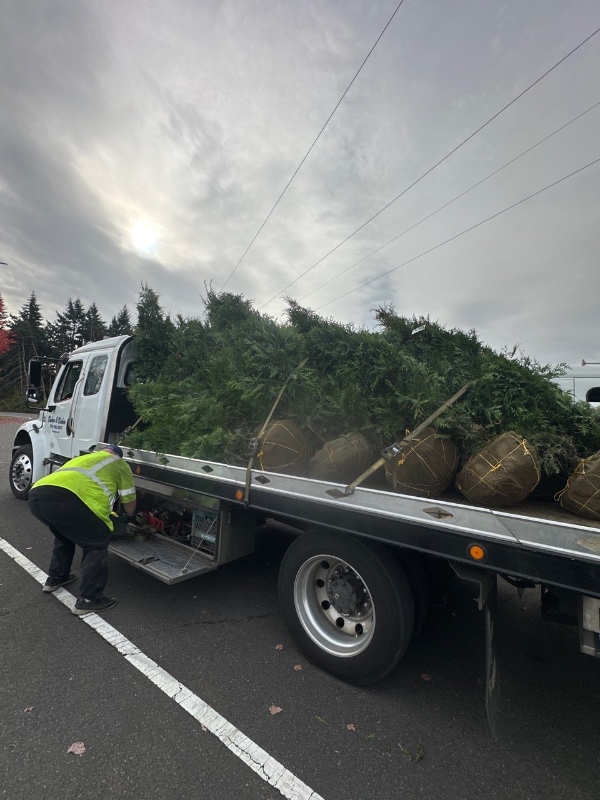
The job began around 1:45 in the afternoon. Oscar and Jim used the wheel lift to winch the trees from the trailer and position them onto the flatbed. Each piece of cargo came off the trailer in sequence so the remaining load would balance correctly.
This stage of the operation involved a full load transfer service. By relocating the excess trees to the flatbed, we removed several thousand pounds from the original trailer. That reduction allowed the vehicle to meet the limits enforced at the scale.
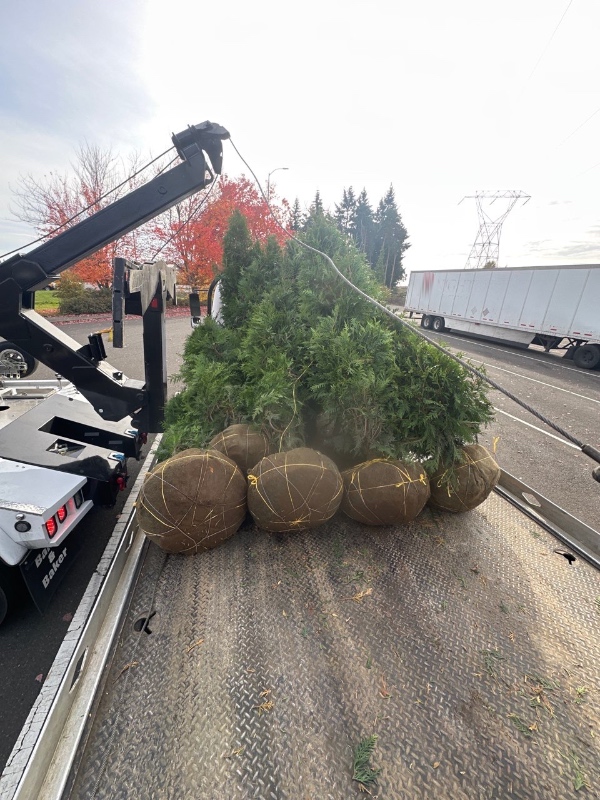
Once the flatbed carried the removed trees, the process continued with a cargo offload service that allowed us to move the load back to the shipper. The driver could then proceed with a lighter and compliant trailer after the inspection cleared the vehicle.
Throughout the operation, we handled the call as part of our ongoing I-5 commercial towing work along this busy corridor. Commercial traffic moves constantly along this route, and the Hubbard Port of Entry often identifies loads that need adjustment.
The trees we removed traveled north with us to the shipper on Mt Angel Gervais Road in Gervais. Returning the cargo allowed the shipper to reorganize the shipment before sending it out again. Jobs like this appear regularly in I-5 commercial towing, especially when landscaping materials or agricultural products carry unexpected weight.
By the time we finished unloading and securing the cargo, the clock read about 4 PM. The work from arrival through transport and delivery fit into a little more than two hours. Situations like this illustrate how I-5 commercial towing can involve more than pulling a disabled vehicle. Cargo handling and weight corrections appear frequently in our work.
Baker & Baker Towing Handles I-5 Commercial Towing Calls
At Baker & Baker Towing, we respond to many situations across the Interstate 5 corridor, including scale stops, overweight loads, and cargo transfers. Our team works with drivers, scale operators, and shippers to resolve issues that stop a truck from continuing its route.
Our equipment allows us to handle jobs that involve I-5 commercial towing, including cargo relocation and load adjustments. With trucks such as flatbeds and wheel lift units, we move freight, remove excess weight, and return cargo to its origin when necessary.
When drivers need help along the interstate, our crew arrives ready to complete the work and keep freight moving through Oregon with reliable I-5 commercial towing support.
FAQ
What happens if a commercial truck is overweight at a scale?
When a truck arrives at a weigh station and exceeds legal weight limits, scale operators require the driver to correct the issue before continuing. The driver may need to remove cargo, shift the load, or arrange another vehicle to take part of the shipment.
How do towing teams remove cargo from an overloaded trailer?
A towing team typically uses recovery equipment such as a wheel lift or winching system to pull cargo from the trailer. The removed items get placed onto another truck so the original trailer meets legal weight requirements.
What types of cargo often cause overweight trailer problems?
Heavy materials like landscaping items, soil, construction supplies, machinery, and agricultural products often create weight issues. Items with soil or water content can weigh more than expected, which pushes trailers past legal limits.
What is a load transfer during a commercial truck incident?
A load transfer occurs when cargo moves from one truck to another. This process helps correct weight problems, stabilize a trailer, or allow the original truck to continue once the cargo amount meets regulations.
Why do weigh stations stop trucks with heavy loads?
Weigh stations check commercial vehicles to make sure they follow weight and safety laws. Excess weight can damage roads, reduce braking ability, and increase the risk of mechanical failure.
What should a truck driver do if their trailer is overweight?
The driver should follow instructions from scale operators and contact a towing or recovery service that can assist with cargo removal or load transfer. Acting quickly helps resolve the issue and allows the shipment to continue after the trailer meets weight limits.