When the Road Fights Back
From coast to cascade: what does it take to winch vehicles in the Beaver State? We can tow vehicles through mossy forests, along icy mountain roads, across muddy backroads, and right out of the sand near the coast. Oregon’s landscape doesn’t hold back. But neither do we. That’s why winch systems are more than just a tool in our truck; they’re a lifeline when roads run out and nature digs in. When people call for Oregon City heavy towing, they’re often facing the kind of terrain that needs more than brute force. It needs the right pull, the right angle, and a whole lot of towing know-how.
Winch systems are how we recover what can’t be simply towed. It’s how we lift, drag, reposition, and rescue vehicles stuck in places tow trucks alone can’t reach. In Oregon, where a road can turn into a mudslide in minutes, winching is often the only way out.
Why Oregon’s Terrain Demands Better Equipment
Oregon’s terrain doesn’t play nice. The state shifts from slick, rainy valleys to snow-covered mountain passes in a matter of miles. Each type of terrain brings its own recovery challenge.
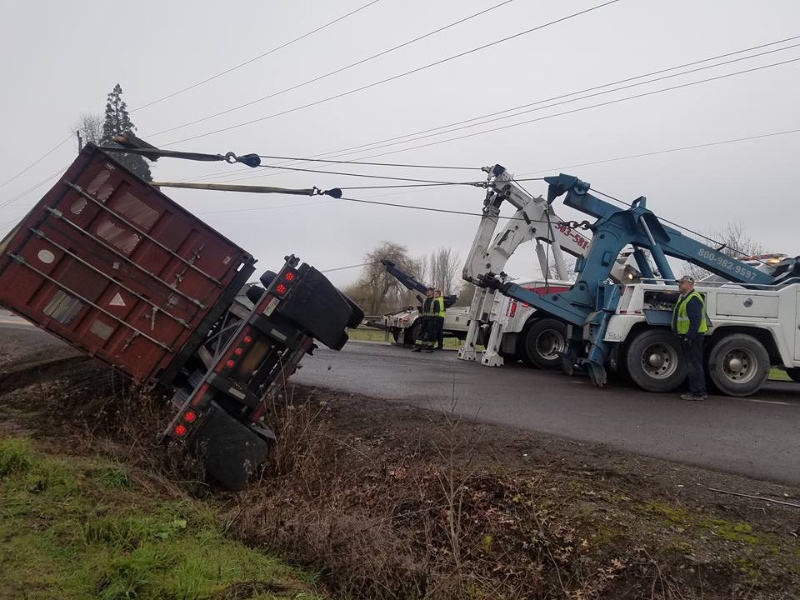
On the coast, sand pulls vehicles in and won’t let go. Up in the Cascades, snow hides the edges of steep slopes. Around Oregon City, it’s not unusual to see pickups slip off gravel shoulders into steep roadside ditches. We’ve learned to read the landscape fast and bring in the right gear to match.
Winch systems aren’t all created equal. Some are best for pulling vehicles straight up a slope. Others are rigged to pivot around trees or guide a vehicle safely back to solid ground. We choose the right setup based on three things: vehicle weight, terrain resistance, and access.
What Makes a Good Winch Recovery?
Understanding Weight Ratios
The first thing we check is vehicle weight. A winch must pull at least 1.5 times the weight of the stuck vehicle. If the truck is sunk in mud or snow, we factor in resistance which can double or triple the force needed.
Proper Anchor Points
Trees, rocks, tow hooks… every recovery starts with finding a solid anchor. On narrow Oregon trails, sometimes we use multiple anchors with pulley blocks to change the direction of force and protect nearby terrain.
Cable Angles Matter
We don’t just hook and pull. A bad angle can tip a vehicle or bury it deeper. We use snatch blocks and extensions to control direction and apply steady force in the safest line possible.
When Winching is the Only Option
Oregon weather can turn mild trips into search-and-rescue efforts. Here are a few scenarios where winching is essential:
- A delivery van slid sideways on a snowy incline in Oregon City.
- An off-roader buried in soft dirt near Estacada after rain turned the trail to sludge.
- A stranded RV that veered into a drainage ditch on a sharp turn.
Each of these called for Oregon City heavy towing and winch recovery, not just to move the vehicle, but to do it without causing more damage.
Tips for Drivers: What to Do if You’re Stuck
Getting stuck is frustrating. Here’s how to help our Oregon City heavy towing team help you:
- Don’t keep spinning your wheels, it can bury your vehicle deeper.
- If it’s safe, get out and note your surroundings (what you’re stuck in, slope, obstacles).
- Take a photo or drop a pin to help us locate you faster.
- Stay inside the vehicle if you’re near traffic or in a dangerous area.

Baker & Baker Towing: Experts in Oregon City Heavy Towing and Winch Recovery
At Baker & Baker Towing, we’ve built our service around Oregon’s rugged demands. Our Oregon City heavy towing team doesn’t shy away from the tough calls: those winch jobs on the side of a cliff, in a muddy gully, or off a snowy highway. We come prepared, every time. Our fleet includes high-capacity winch trucks ready for deep recovery work, operated by professionals who know Oregon’s geography and weather patterns inside and out. We also carry a wide range of gear to tailor each recovery to the specific terrain. When you call Baker & Baker Towing for Oregon City heavy towing, you’re getting a Oregon City heavy towing crew that understands how to recover your vehicle with care, strategy, and the right tools for the job. From the backwoods to the freeway shoulder, we’ve got Oregon covered. Let’s get your wheels rolling again. One pull at a time.
FAQ
What is a winch system used for in towing?
A winch system is used to pull vehicles that are stuck, off-road, or in hard-to-reach places. It works by winding a strong cable or rope around a drum to apply steady pulling force.
Can winching damage a vehicle?
When used correctly by trained professionals, winching does not damage a vehicle. Proper rigging and anchor points protect the frame and components during recovery.
Is winching only for large vehicles?
No, winching can be used for all vehicle sizes. It is helpful for cars, trucks, RVs, and even motorcycles, depending on the situation.
How long does a winch recovery take?
The time depends on access, terrain, and vehicle position. Some recoveries take minutes while others may require more planning and setup.
What should I do if my vehicle is stuck off-road?
Stay calm and avoid spinning the tires. If it is safe, exit the vehicle and take note of your surroundings. Call a professional towing service with recovery experience.
Can a regular tow truck perform a winch recovery?
Not always. Winch recoveries often need trucks equipped with specific gear and high-powered winch systems to handle rough conditions and heavier loads.