From Fleet Service to Scrap Yard
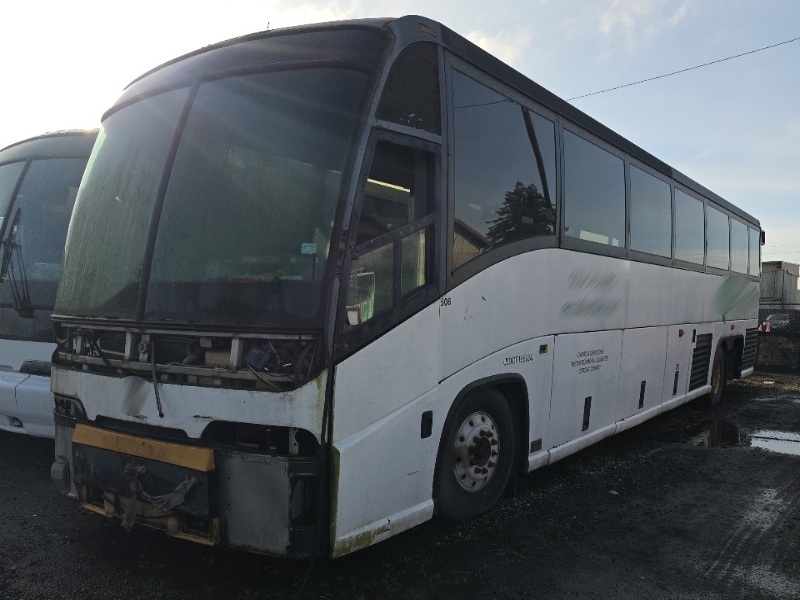
Large vehicles reach the end of their working life just like anything else on the road. At that point, disposal becomes a serious task that requires planning, preparation, and the right towing support. We recently handled a Sherwood bus towing service job that involved transporting multiple buses that had reached their final stop. These vehicles needed to be moved from SW Graham’s Ferry Road in Sherwood to a scrap yard on N Columbia Blvd in Portland.
Disposing of buses takes more effort than hauling an average vehicle. Scrap facilities need access to the steel frame, so components often come off first. Seats, wheels, and other reusable parts get removed before transport begins. Our tow truck operators work closely with customers during this stage, making sure every step lines up so the buses can move to the scrap yard without delay.
Preparing Buses for Scrap Yard Transport
This project involved a regular customer who frequently calls us for large vehicle removals. Their fleet included several buses that had reached the end of their service life. Once they completed the early preparation work, they called our Sherwood bus towing service team to move the vehicles to the recycling facility in Portland.
The preparation process included removing several components before towing began:
- Seats and reusable interior pieces
- Rear wheels on the larger diesel bus
- The driveshaft on both buses
- Additional items needed for scrap yard access
After the parts were removed, the buses were ready for scrap yard transport. Moving these large vehicles still requires careful planning because size, weight, and hook-up points all affect how the tow will proceed.
Dispatching the Right Equipment for the Job
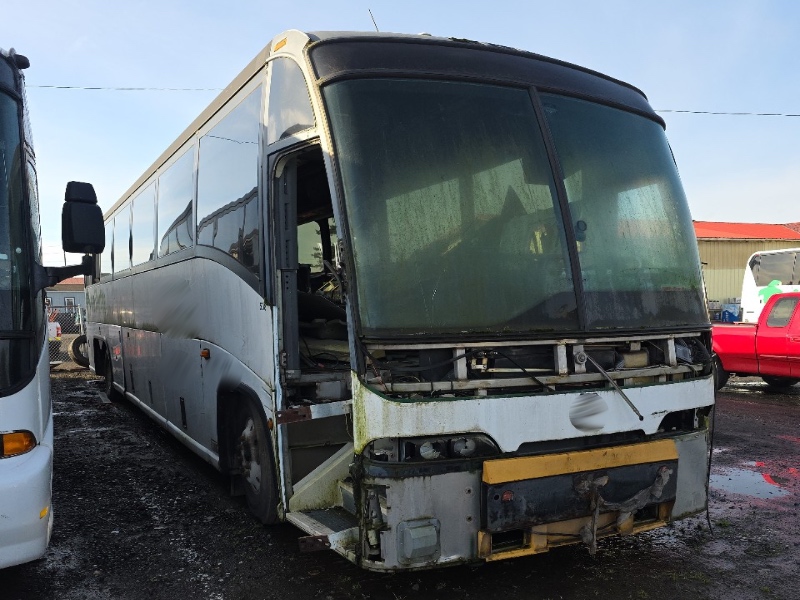
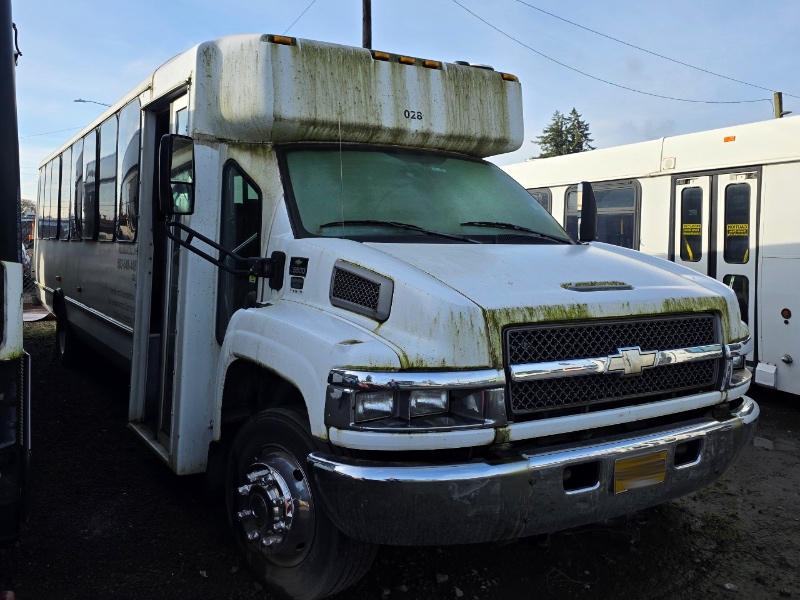
We sent two trucks to handle the work since the buses were different sizes. Our heavy truck 204 handled the larger diesel pusher bus, which weighed in the 30,000-pound range. Our medium duty truck 213 handled the smaller airport shuttle bus that weighed roughly 15,000 to 17,000 pounds.
Two of our operators handled the job that day:
- Tenny operating heavy truck 204
- Travis operating medium duty truck 213
Because this job involved multiple buses throughout the day, our team stayed on the route between Sherwood and Portland from around 9 AM until roughly 6 PM. Each tow required preparation, hookup, transport, and drop-off at the scrap facility.
Non-Conventional Hookup on the Diesel Bus
The larger diesel pusher required a slightly different approach. Normally, buses get hooked from the front, and the driveshaft is removed before transport. In this situation, the driveshaft had already been removed by the fleet team.
Since the rear axle wheels had also been removed, we completed a non-conventional hookup and connected the tow from the rear of the bus. This method allowed us to stabilize the vehicle and move it safely onto the towing route.
Once secured, we transported the diesel bus along the I-5 route toward Portland. With the weight around the 30K pound range, careful positioning and steady towing helped keep the bus stable during the trip to the scrap yard.
Conventional Tow for the Shuttle Bus
The smaller shuttle bus followed a more standard procedure. This airport-style bus weighed around 15,000 to 17,000 pounds, making it suitable for our medium duty tow truck.
Travis performed a conventional front hookup for this bus. The driveshaft had already been disconnected, which simplified the process. After securing the bus, we transported it along the same I-5 route toward the Portland scrap yard.
Projects like this often involve fleet vehicle disposal transport for companies retiring older equipment. Coordinating timing, preparation, and towing equipment helps keep the process smooth for everyone involved.
Baker & Baker Towing Handles the Heavy Lifting in Every Sherwood Bus Towing Service
Jobs like this are a regular part of our work at Baker & Baker Towing. Our team handles large vehicle removals, fleet retirements, and Sherwood bus towing service requests for customers throughout the area. From SW Graham’s Ferry Road in Sherwood to scrap facilities across Portland, we help move buses that have reached the end of their service life.
Fleet operators often call us when several vehicles need relocation in a single day. Our Sherwood bus towing service team coordinates equipment, operators, and transport routes so these projects stay organized. We regularly assist with Sherwood bus towing service work that involves heavy buses, shuttle buses, and other large vehicles headed for recycling facilities. When companies need dependable bus towing service support to move end-of-life vehicles to the scrap yard, our Sherwood bus towing service crew is ready to handle the job.
FAQ
What happens to buses after they reach the end of their service life?
Once a bus reaches the end of its operational life, it usually moves to a recycling facility. Before transport, crews often remove parts such as seats, wheels, and other reusable components. The scrap yard then processes the remaining structure and separates metals that can be recycled.
Why do some large vehicles need preparation before towing?
Many large vehicles require partial disassembly before transport. Removing heavy parts can reduce weight and allow the recycling facility to access materials more easily. This preparation also helps ensure the vehicle can be safely connected to the tow truck.
How heavy are retired buses that need transport?
Bus weights vary based on size and configuration. Smaller shuttle style buses often weigh between fifteen thousand and seventeen thousand pounds. Larger diesel powered buses can reach around thirty thousand pounds or more.
What type of tow trucks are used for large buses?
Heavy duty tow trucks handle the largest buses because they are designed to manage high weight loads. Medium duty trucks can move smaller buses or shuttle vehicles. The correct truck depends on the vehicle’s weight, length, and mechanical condition.
Can a bus be towed from the rear instead of the front?
Yes, although it depends on the situation. Most buses are connected from the front with the driveshaft removed. If parts have already been removed or the vehicle configuration requires it, operators may perform a rear connection to move the bus safely.
Why do companies move several buses to scrap yards at once?
Fleet operators often retire multiple vehicles at the same time. Coordinating transportation in batches helps streamline the disposal process. It also allows the recycling facility to handle the vehicles in an organized way once they arrive.