
Inside a Mobile Repair Truck Build
Late in the morning on South Tull Road in Canby, OR, we headed out to help with a project that called for steady lifting. Frank at Model 1 Commercial Vehicles gave us a call because his team was building a box truck that would serve as a mobile repair center, and they needed help with one major piece inside. The Snap On toolbox weighed several thousand pounds, and this towing job called for our Canby decking services to get it into the back of the truck.
Model 1 Commercial Vehicles sells buses to schools and tour companies, so the new truck had an important role. Their team wanted a mobile unit that could travel to stranded customers and handle smaller roadside repairs. The toolbox had to sit securely inside the box truck so the repair center could function the way they planned. We sent Oscar and Brian with a flatbed and arrived at 11:20 AM ready to get to work on this commercial decking service job.
Finding a Place to Lift the Toolbox
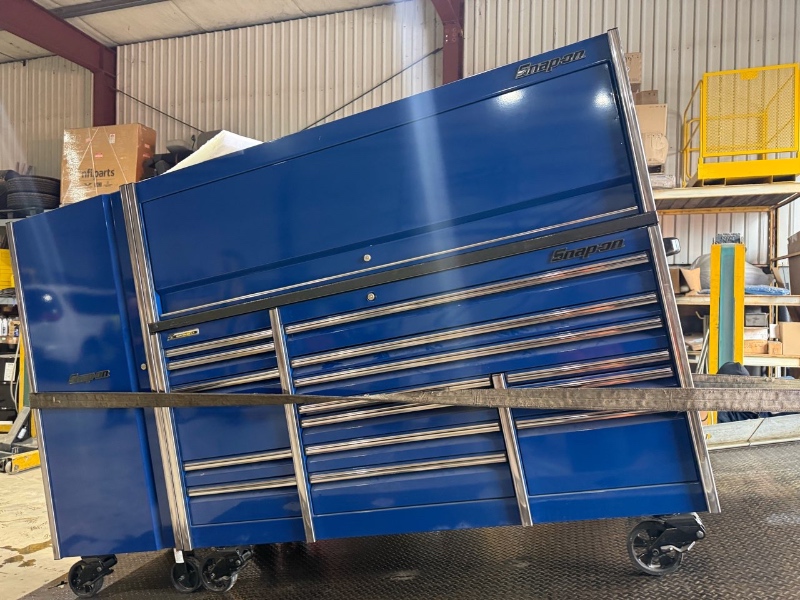
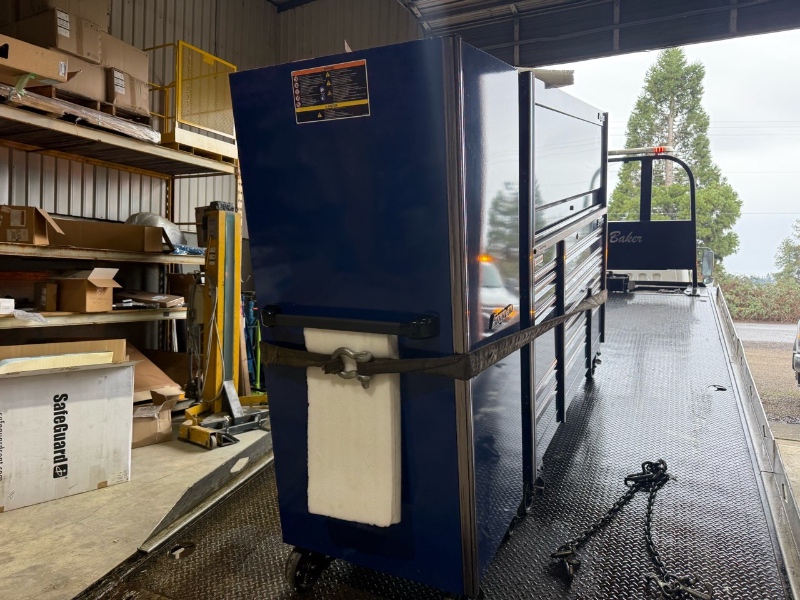
The first challenge came from the toolbox itself. It did not have many good spots where we could attach our rigging, and we knew we had to avoid dents, scratches, and bent metal. Oscar and Brian brought soft straps so they could spread out the pressure and keep the finish in good shape. They also placed a piece of styrofoam between the toolbox and the shackle to protect the edge during the lift.
Loading the Toolbox onto the Flatbed
Once the straps were in place, we pulled the toolbox onto the flatbed. After that, we leveled the bed with the deck of the trailer attached to the box truck. That let us roll the toolbox directly from one surface to the other without a steep angle or sudden movement. Around our shop, we call that process a decking, and it works especially well for heavy equipment decking jobs that involve large items with limited lifting points.
The Challenge Behind the Toolbox Move
At first glance, moving a toolbox may not sound unusual. This toolbox carried far more weight than a standard shop cabinet, and the shape made it awkward to handle. We had to keep the toolbox level the entire time because too much tilt could shift the weight and damage the drawers or frame.
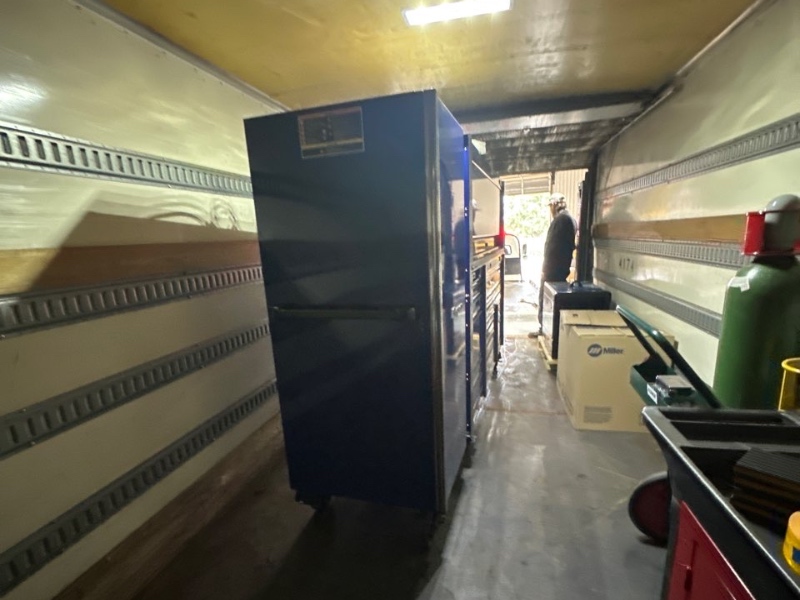
A job like this depends on preparation more than speed. Oscar and Brian looked over the toolbox, chose their lifting points, and talked through each step before they touched anything. That extra time helped the move go smoothly from start to finish. By 12:15 PM, the toolbox sat in the box truck exactly where Model 1 wanted it.
Protecting the Toolbox During the Lift
Several thousand pounds hanging from a strap can put a lot of stress on the metal. We used soft straps because they wrap around the toolbox without biting into the edges. The styrofoam added another layer of protection where the shackle met the cabinet. Jobs like this are one reason we rely on Canby decking services when a customer needs to move large shop equipment without damaging it.
Before we began the transfer, we also checked a few important details:
- Weight and balance of the toolbox
- Clearance between the flatbed and truck deck
- Strap placement around the cabinet
- Drawer locks and loose parts inside
Those checks help us keep Canby decking services organized and controlled from the first lift to the final placement.
Why Decking Worked Best
Using the flatbed gave us a smooth path into the truck. Instead of trying to lift the toolbox high into the air and lower it into the box body, we rolled it across at the same height. That reduced movement and gave us more control over the weight. We use Canby decking services for projects like this because the method works well with large toolboxes, equipment cabinets, and shop machinery.
How Baker & Baker Uses Canby Decking Services for Jobs Like This
At Baker & Baker, we see projects that fall outside a typical tow call. A customer may need a toolbox moved into a service truck, a piece of machinery loaded into a trailer, or a large cabinet shifted into place. In each case, we plan the move around the weight, the lifting points, and the space available. That is why Canby decking services remain such a useful part of the work we do.
This job for Model 1 Commercial Vehicles showed how much thought can go into one move. Frank needed the toolbox loaded into the new repair truck so his team could finish building their mobile service unit. Oscar and Brian handled the entire process with the flatbed, soft straps, and careful positioning. We use Canby decking services every time a project calls for steady handling and a clean transfer into place.
FAQ
What is decking in towing and transport?
Decking means moving a heavy item from one platform to another at the same height. We often use this method to load toolboxes, machinery, and equipment into trailers or box trucks.
How do you move a heavy toolbox without damaging it?
We use soft straps, padding, and careful lifting points to protect the toolbox. Before we move anything, we check the weight, balance, and any areas that could bend or scratch.
Why would a flatbed work better than a forklift?
A flatbed gives us a smooth, level path into the truck. A forklift can struggle in tight spaces or with equipment that does not have strong lifting points.
How much can a large shop toolbox weigh?
A fully loaded shop toolbox can weigh several thousand pounds. Large steel toolboxes with tools inside often weigh much more than people expect.
How long does a toolbox move usually take?
The time depends on the size, weight, and how easy it is to reach the equipment. Many jobs take less than an hour once the crew arrives and sets up.
What kinds of equipment can go into a mobile repair truck?
Mobile repair trucks often carry toolboxes, air compressors, jacks, battery chargers, diagnostic equipment, and storage cabinets.