RV There Yet?
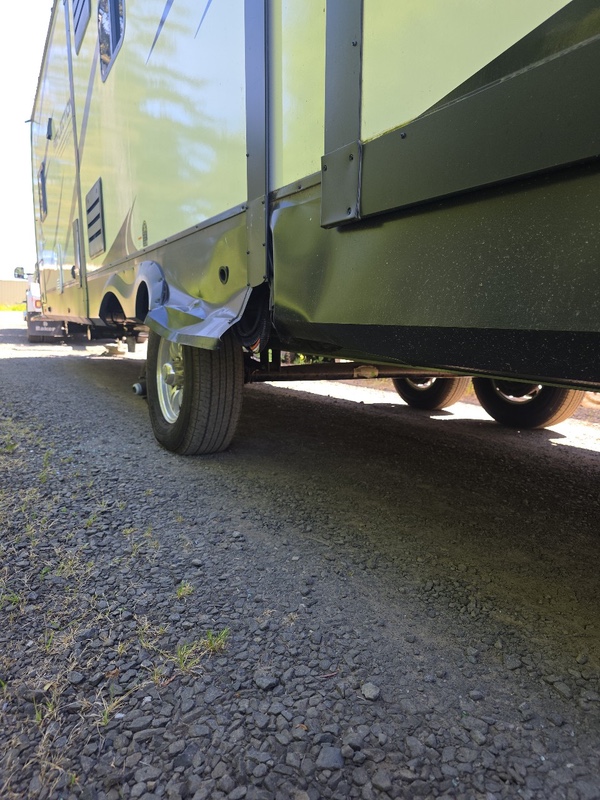
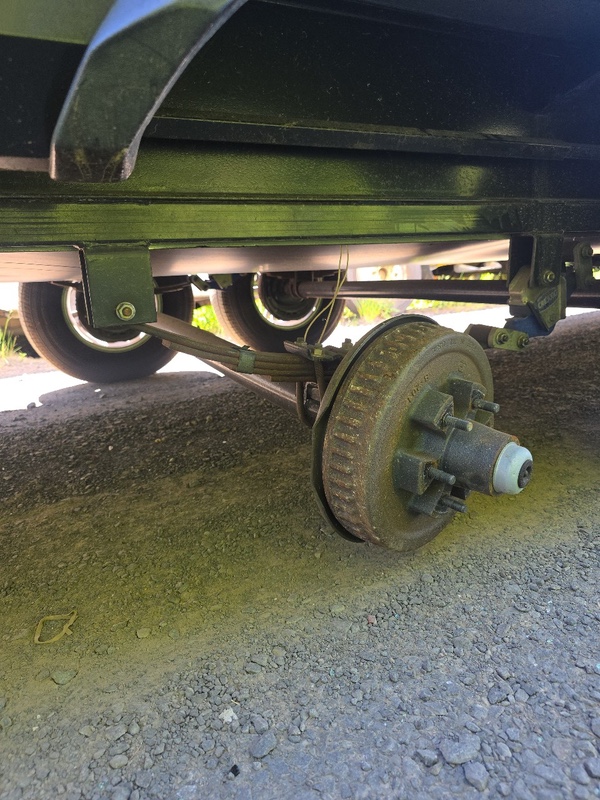
Stopping for fuel should be one of the easier parts of a trip. But gas station entrances can be tricky when you’re pulling a large RV trailer. At a station in Oregon, a camper caught its axle on one of the islands as the driver pulled in. One rear wheel was pushed into the body, and sheet metal was torn away. Our I-5 RV trailer transport job began after police called Affordable Towing and Repair, who brought the damaged camper to their yard.
We were then asked to transport it along I-5 to American RV Repair on Rosewood Avenue in Vancouver, Washington. Most of the RV was still in excellent condition. The damaged axle, however, presented a considerable problem.
The Height Was the Real Headache
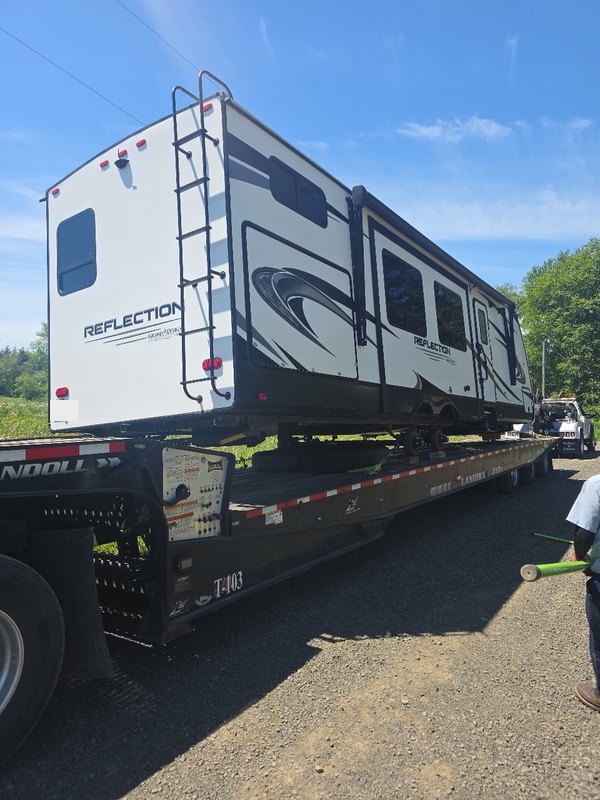
This was a large vehicle even before we considered loading it onto another trailer. Putting the RV on a carrier would raise its overall height enough to create clearance problems.
We had two states to travel through. An overheight move could mean contacting Oregon and Washington for permits and approved routes, paying fees, and hoping a workable route existed. Low-hanging branches and other overhead obstacles were concerns, too.
We needed another approach. The loaded combination had to be under 14 feet, and we wanted to protect the RV’s damaged wheel area.
Two Trucks, Two People, One Awkward Load
We sent Tanny with a semi tractor and our 50-foot Landoll trailer. Oscar came in Truck 224, a smaller wheel-lift truck equipped with a ball hitch.
That second truck played an important role. Oscar could use the hitch to help back the camper onto the Landoll, while Tanny handled the larger hauling setup.
Affordable Towing and Repair had already done a good job with the initial recovery. We were taking over the trip from Woodburn to Vancouver.
How We Got It Low Enough to Travel
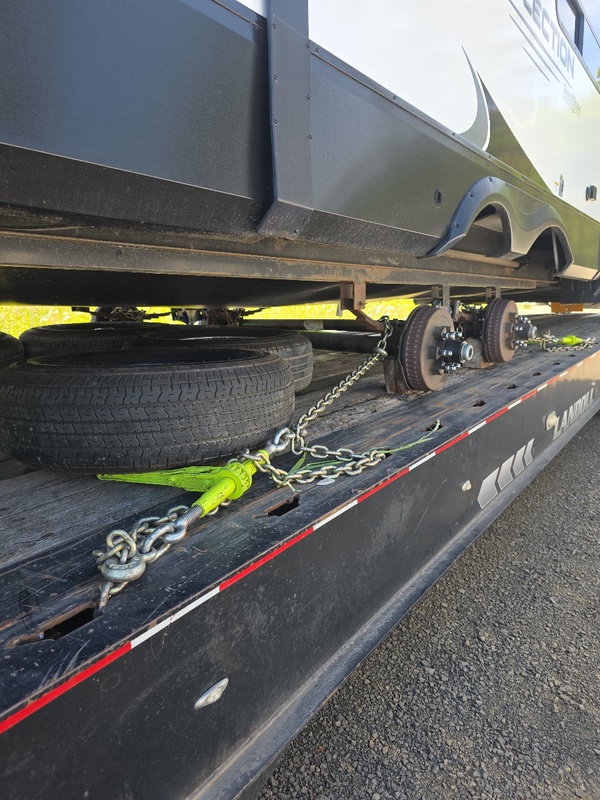
There was no simple hookup option. Our solution involved the Landoll, the wheel-lift truck, jacks, and chains. During loading, we had to deal with the wheels and secure the axles to bring down the traveling height.
The work included:
- Maneuvering the camper: Oscar used Truck 224 and its ball hitch to help back the RV onto the Landoll.
- Removing the wheels: We used jacks to lift the trailer and remove wheels during loading.
- Supporting the axles: We secured the axles with chains to avoid damaging components, including the brakes.
- Reducing the height: The adjusted setup brought the load under 14 feet.
For RV transport along I-5, a few inches can change the plan. We wanted to get the camper to the repair shop without striking anything overhead or damaging its brakes.
Getting From Woodburn to Vancouver
A tall camper riding on a Landoll is different from one being pulled on its own wheels. Overhead obstacles become a concern, and crossing from Oregon into Washington adds another layer of route planning.
By getting the RV under 14 feet, we avoided relying on an uncertain overheight route. That adjustment made I-5 camper hauling practical for this particular RV.
We delivered it to American RV Repair on Rosewood Avenue in Vancouver, where its damaged axle and bodywork could be addressed.
A Small Scrape With Big Consequences
This damaged RV transport on I-5 followed a relatively minor gas station incident. One rear wheel ended up pushed into the camper’s body, though the rest remained in good condition.
We had to protect an otherwise sound RV while dealing with the damage that prevented a normal tow. Tanny and Oscar worked together using equipment with two different jobs: one truck to maneuver the camper, another to carry it.
With RV trailer hauling along I-5, sometimes the complicated part isn’t the distance. It’s getting the load ready to go.
Baker & Baker Towing for I-5 RV Trailer Transport
At Baker & Baker Towing, we handle towing and equipment moves that need a different plan from an ordinary roadside pickup. For this job, we combined a 50-foot Landoll, a ball-hitch wheel-lift truck, jacks, and axle support to prepare a damaged camper for transportation.
We’re grateful to Affordable Towing and Repair for handling the initial recovery, and we were glad to get the RV to American RV Repair in Vancouver. When customers need RV trailer transportation on I-5, we look at what the equipment needs before we start moving it, especially when height and damage are working against us.
Frequently Asked Questions
Where did the RV trailer accident happen?
The RV caught its axle on a gas station island in Woodburn, Oregon. The damage affected one rear wheel and the camper’s bodywork.
Why couldn’t the damaged RV trailer be towed normally?
One rear wheel had been pushed into the camper body after the axle caught the gas station island. The damage made conventional towing unsuitable, so we transported the RV on a Landoll trailer.
Why was the RV’s height a problem?
Loading a tall RV onto another trailer increases its overall traveling height. That can create problems with bridges, low branches, and other overhead obstacles.
How did Baker & Baker Towing reduce the RV’s height?
We used jacks to remove wheels and secured the axles with chains as part of the loading process. This brought the loaded combination under 14 feet.
What equipment was used to transport the RV?
Tanny operated a semi tractor with a 50-foot Landoll trailer. Oscar used Truck 224, a smaller wheel-lift truck with a ball hitch, to help maneuver the camper onto the trailer.
Where was the RV taken for repairs?
We transported it along I-5 to American RV Repair on Rosewood Avenue in Vancouver, Washington.