
A Heavy Lift Before the Long Haul
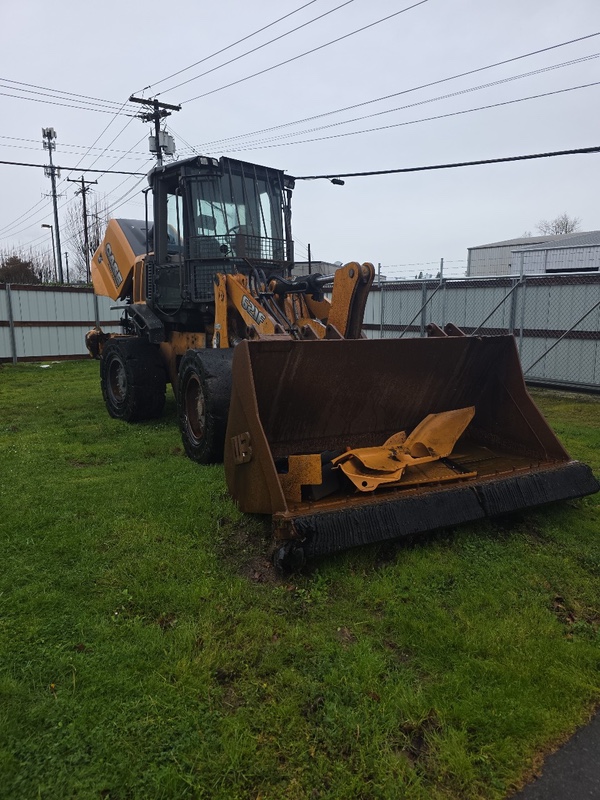
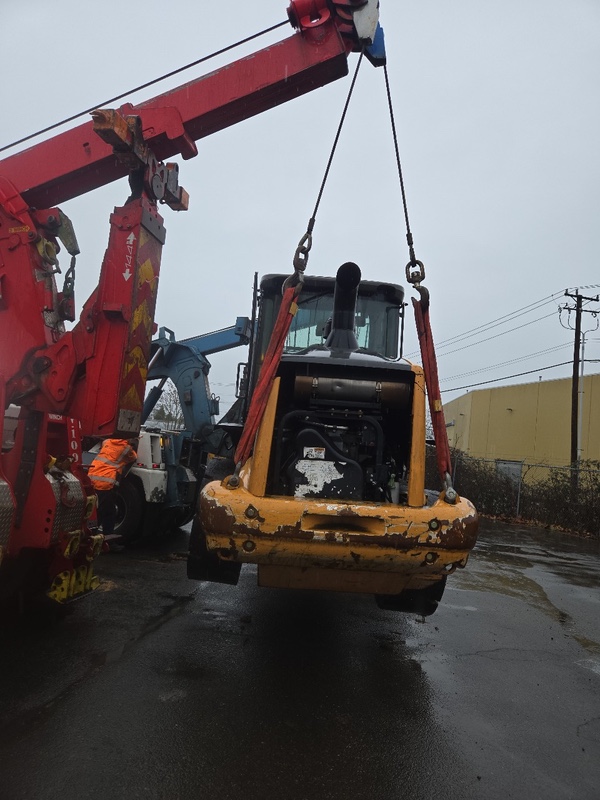
A 621F Case Loader was sitting on Industrial Way NE in Salem with one big problem: it was not running, and the bucket was down. The machine weighed about 26,000 pounds, so this was not a quick ramp-and-go situation. The customer needed it lifted and placed on a lowboy trailer for out-of-state transport, which made this a Salem heavy equipment loading service call from the start.
When a machine cannot move under its own power, every detail matters. The bucket position, ground surface, machine weight, trailer height, and access around the site all shape the plan. A disabled vehicle or machine may look simple from a distance, but the loading work can get complicated fast once the wheels will not roll and hydraulics will not help.
Why the Bucket Position Changed the Job
A loader with the bucket down can limit how it moves, how it lifts, and how close the trailer can sit. If the machine ran, the operator could raise the bucket, steer into position, and drive onto the trailer. Since it was disabled, we had to treat the bucket as part of the recovery problem.
Our crew looked at the loader’s stance, the space on Industrial Way NE, and the lowboy position before putting tension on anything. A 26,000-pound loader can shift if the lift points or pull direction are wrong. We wanted the machine placed cleanly on the trailer without dragging the bucket, stressing the frame, or making the lowboy reposition again and again.
Two Heavy Wreckers Gave Us Control
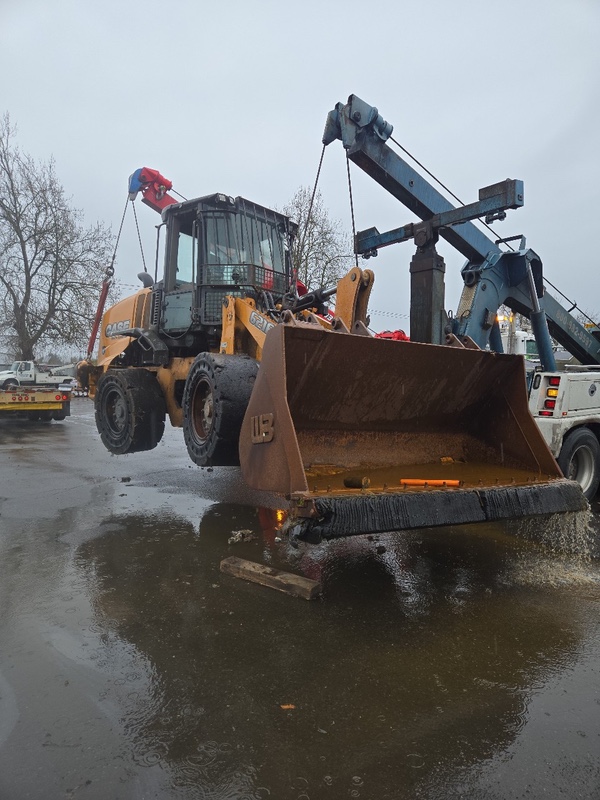
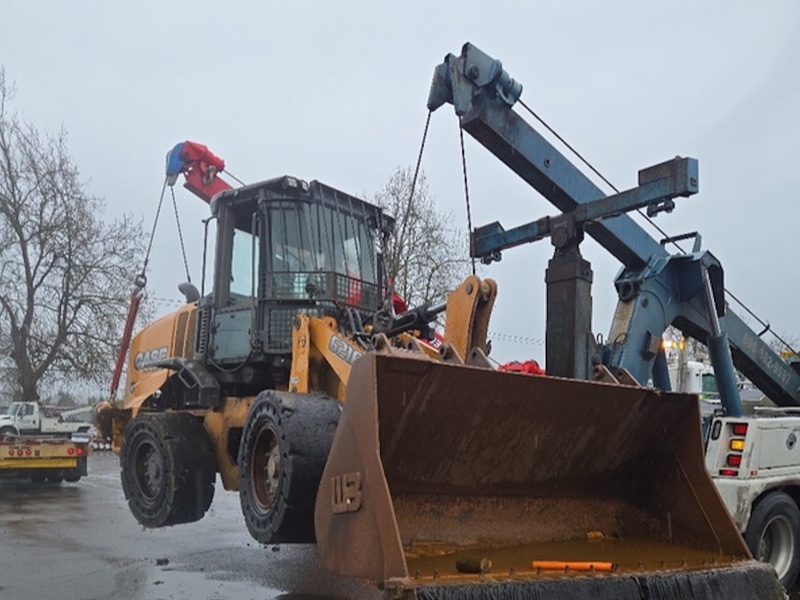
We sent trucks 204 and 220, both heavy wreckers, with Tenny, Jon, and Oscar on the job. Two wreckers gave us better control over the lift and placement than one truck fighting the machine from a bad angle. That mattered because the loader was headed out of state and needed to sit correctly on the trailer before transport.
This kind of Salem heavy equipment loading service overlaps with heavy equipment transport planning, even when our main job is the lift and load. The trailer, machine, and recovery trucks all have to work together. Construction equipment transport can get delayed quickly when a disabled loader is sitting with the bucket down and no way to self-load.
What We Checked Before the Lift
Before lifting, we checked the loader weight, bucket position, tire contact, lowboy deck height, and working room for both wreckers. We also talked through where the machine needed to land on the trailer. A few inches can matter when the load has to be secured for a long haul.
For this Salem Heavy Equipment Loading Service, the working list looked like this:
- Confirm loader weight and model
- Position both heavy wreckers
- Keep the lowboy lined up for loading
- Watch bucket clearance during the lift
- Guide the machine onto the deck
- Set it where securement could happen properly
Disabled equipment transport often starts with this kind of problem. The machine is not ready for the road until someone can get it loaded, squared up, and placed where the hauler can secure it.
Two Hours From Setup to Loaded
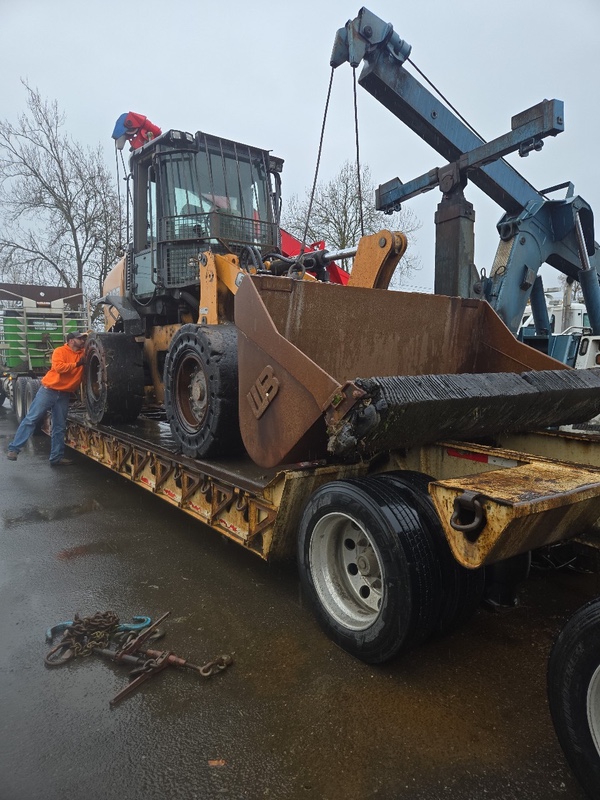
The job took about two hours. That included setting the wreckers, checking the lift, communicating between operators, and getting the 621F Case Loader onto the lowboy trailer. The work called for patience, weight control, and a crew that knew how to handle a dead machine without dragging the bucket or fighting the trailer position.
For this Salem heavy equipment loading service, the bucket was down, the loader would not run, and the hauler still needed the machine placed correctly for Loader Transport Service out of state. The crew kept the lift controlled from setup to final placement so the trailer could leave Salem with the loader ready for securement.
Baker & Baker Towing Handles Salem Heavy Equipment Loading Service for Disabled Machines
Baker & Baker Towing handles Salem heavy equipment loading service calls for loaders, forklifts, construction machines, and other equipment that cannot load itself. On this job, trucks 204 and 220 gave Tenny, Jon, and Oscar the control needed to lift a 26,000-pound Case Loader and place it on a lowboy trailer without turning the loading site into a bigger problem.
Our Salem heavy equipment loading service work often starts with the same questions: how heavy is it, does it run, where is it sitting, and what trailer is taking it away? For this loader on Industrial Way NE, the answer was two heavy wreckers, three operators, and a careful two-hour loadout so the machine could head out of state from Salem.
Can construction equipment be loaded if it will not start?
Yes. Disabled machines can often be lifted, winched, or positioned with wreckers or recovery trucks. The method depends on weight, access, ground conditions, and trailer setup.
Why does a lowered bucket make loader transport harder?
A lowered bucket can block movement, affect clearance, and change how the machine sits during loading. If the hydraulics do not work, the crew has to plan around that fixed position.
Who decides where equipment sits on a lowboy trailer?
The recovery crew and transport driver usually work that out together. Weight balance, trailer deck space, tie-down points, and transport rules all affect placement.
How long does it take to load a disabled loader?
It depends on the machine size, site access, and whether the equipment can roll. A controlled lift with heavy wreckers may take a couple of hours from setup to final placement.
What details should I give before moving dead equipment?
Share the make, model, weight, location, whether it rolls, and what position the bucket or attachments are in. Photos of the machine and trailer area help a lot.
Can heavy wreckers load equipment without damaging it?
Yes, when the crew uses the right lift points and works slowly. The goal is to control the machine’s weight, avoid dragging attachments, and set it cleanly on the trailer.