A Crane Job With Some History Attached
The Armstrong Chevrolet sign had been part of McMinnville for a long time, so seeing it come down felt a little different than a regular towing job. We could not help but get a little emotional. A sign like that sits above traffic, customers, employees, and years of people pulling into the lot for service, or a brand new truck. When it finally comes down, everybody on notices. Our team was hired for this McMinnville crane service call by a local sign company after the dealership permanently closed.
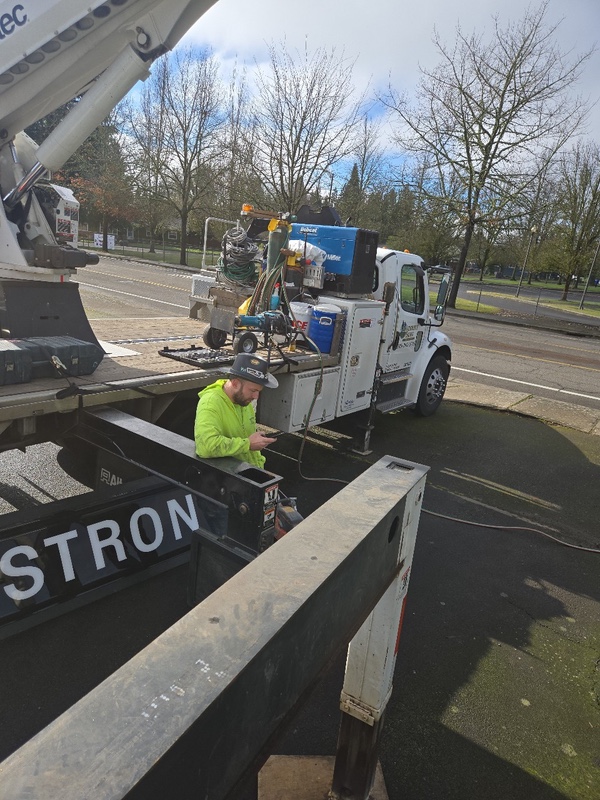
Holding the Weight While the Crew Cut It Free
This was a teardown job. Teardown jobs take patience. Any old sign with power running to it needs careful handling, especially around the electrical components, the mounting points, and the weight of the structure.
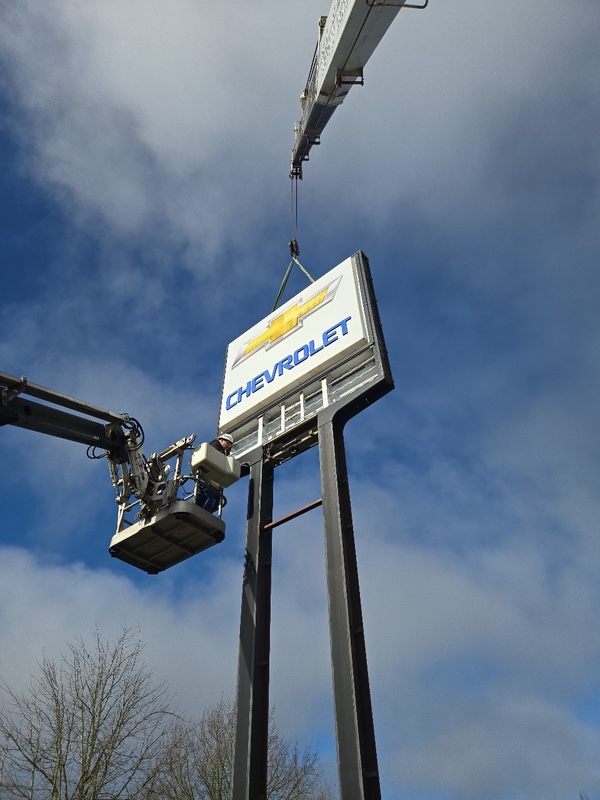
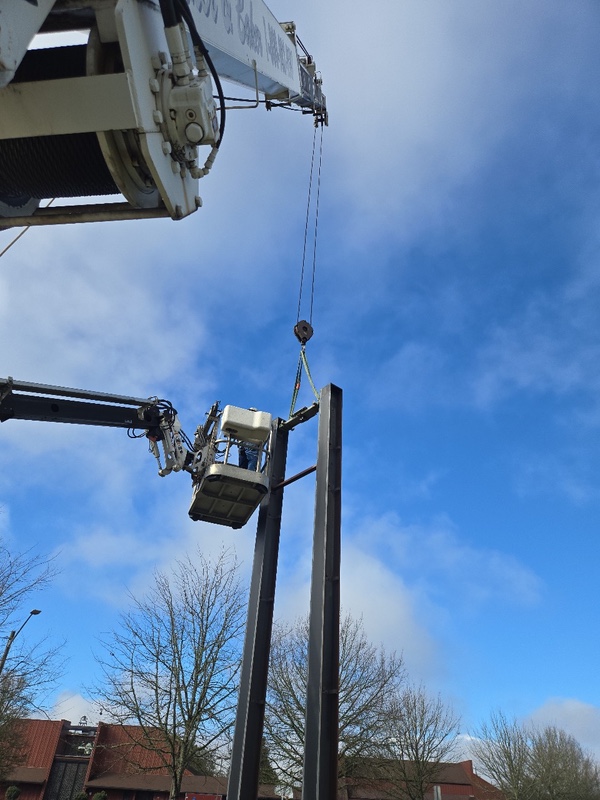
The sign company brought its own bucket truck, which helped a lot. Their crew had a person up in the bucket disconnecting the sign physically and cutting loose the electrical wiring while we kept the sign supported from the crane.
A heavy weight like this can shift once the last bolts come loose, and nobody wants 1,545 pounds of metal swinging over a parking lot or near a vehicle. Even a small movement up high can feel bigger at ground level, so we kept the lift steady and waited for the crew to finish each step before moving.
The Lift, the Weight, and the Column
Jon, our General Manager, ran the crane in truck 209. The sign weighed 1,545 pounds, and the column we removed after that weighed 3,600 pounds, so this was real commercial crane service work, not a quick hook-and-go.
For this McMinnville crane service job, the order of work looked like this:
- Set the crane and confirm the work zone
- Support the sign before final disconnection
- Let the bucket truck crew finish electrical and hardware removal
- Lift and lower the sign
- Remove the 3,600-pound column
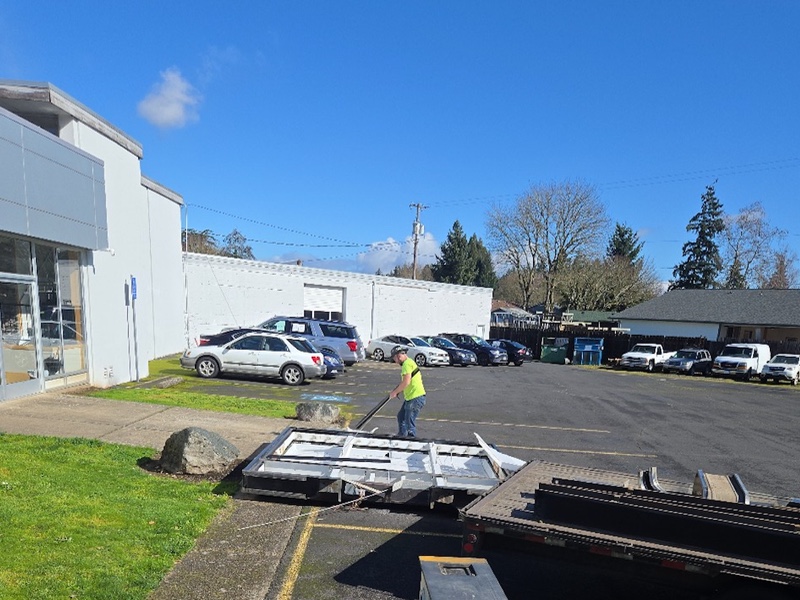
The column was the heavier part of the job, and that is easy to forget because the sign is what everyone sees first. Once the face was down, we still had a solid piece of structure to handle, and it needed the same attention as the sign itself.
Four Hours on Site
The full crane job took about four hours. That sounds simple on paper, but most of that time goes into setup, checking rigging, waiting for clean disconnects, and making sure the lift stays controlled.
This McMinnville crane service call also showed why sign removal service jobs need the right people on each piece of the work. The sign crew handled what they knew best, and we handled the lifting.
How Baker & Baker Handles McMinnville crane service Work
At Baker & Baker, McMinnville crane service work often means odd weights, tight access, and jobs where another trade is working right beside us. We see that with signs, HVAC units, poles, equipment moves, and older structures around town.
This McMinnville crane service job ended with the Armstrong Chevrolet sign and column down and the site cleared. That is usually the goal: get the heavy piece controlled, get it on the ground, and leave the crew with a clean next step.
FAQs
How do crews prepare a large sign before lifting it down?
They check the weight, attachment points, nearby traffic, and power connections first. The sign needs to be supported before anything gets loosened.
Who disconnects the electrical parts during sign removal?
A qualified sign crew or electrical worker usually handles that part. The lifting crew waits until the power and hardware are ready before moving the sign.
Why does a sign removal job take several hours?
Setup takes time. Crews have to position trucks, check rigging, control the work area, and wait for each disconnect step.
Can old sign poles be removed after the sign comes down?
Yes, many jobs include removing the pole or column too. Those pieces can weigh more than the sign itself.
What makes an old business sign hard to remove?
Age, rusted bolts, hidden wiring, height, and nearby obstacles can all slow the job down. Older signs often do not come apart cleanly.
Is a bucket truck always needed for sign removal?
Not always, but it helps when workers need access to wiring, bolts, or panels high above the ground. The crane handles the lift while the bucket truck gives the crew a place to work.