A Sideways Situation on a Country Road
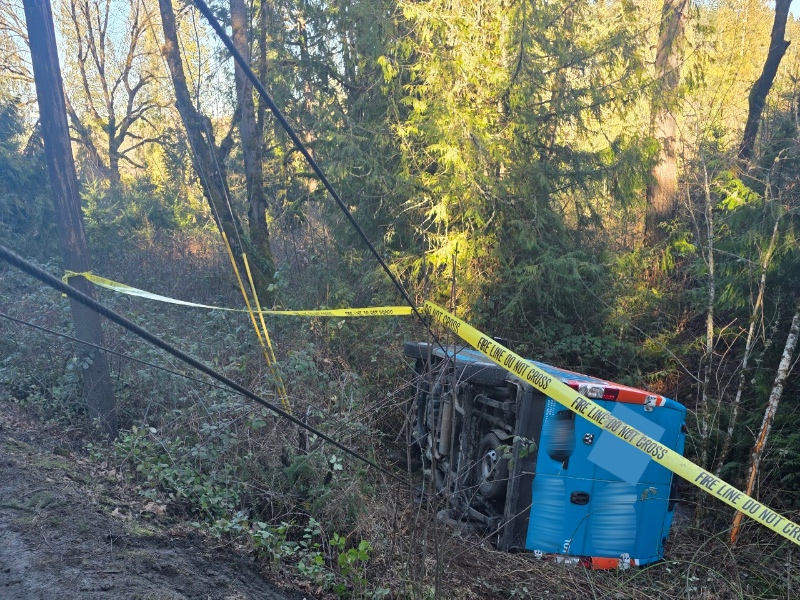
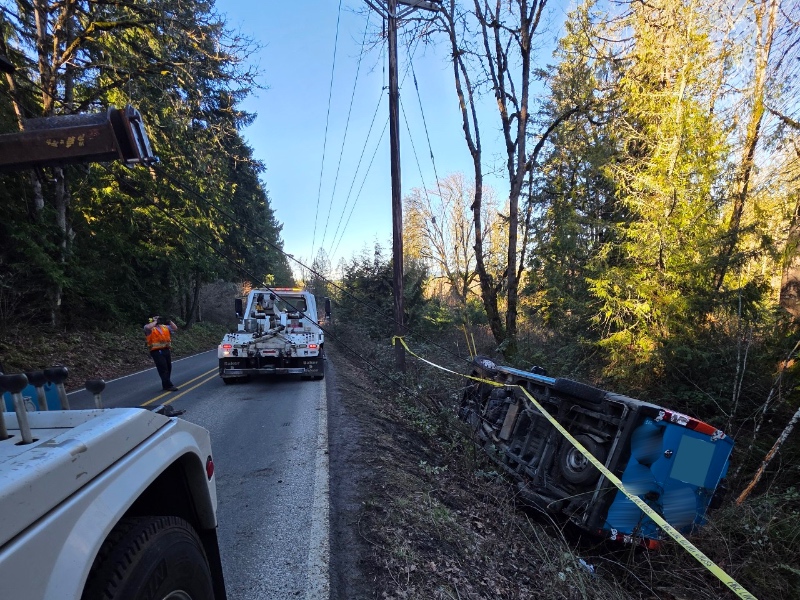
A 1-ton van went off the road near South Dhooghe Road and South Munson Road in Colton in the wee hours of the morning. By the time we got the towing call later that afternoon, the van had already gone down the embankment, rolled onto its side, and ended up in a tight spot below the road. This Colton rollover recovery service job had blue skies overhead, but the scene still had plenty of thunder going on.
The Part People Do Not See From the Road
From the road, a rollover can look pretty simple. Hook it, pull it up, tow it away. That is almost never how it goes, especially when the vehicle is below grade and one lane of the road is blocked.
The Clackamas County Sheriff had already been out and put up caution tape. The road was busy enough that we could not just park two wreckers and start pulling. We brought a flagging truck with signs and had certified flaggers on scene to close one lane and ease traffic through the other.
Setting Up Before the Pull
The flagging setup took about half an hour by itself. Branson and Tony handled the flagging while Tenny and Brian worked as the medium-duty operators. In a spot like that, traffic control is part of the recovery, not a side task.
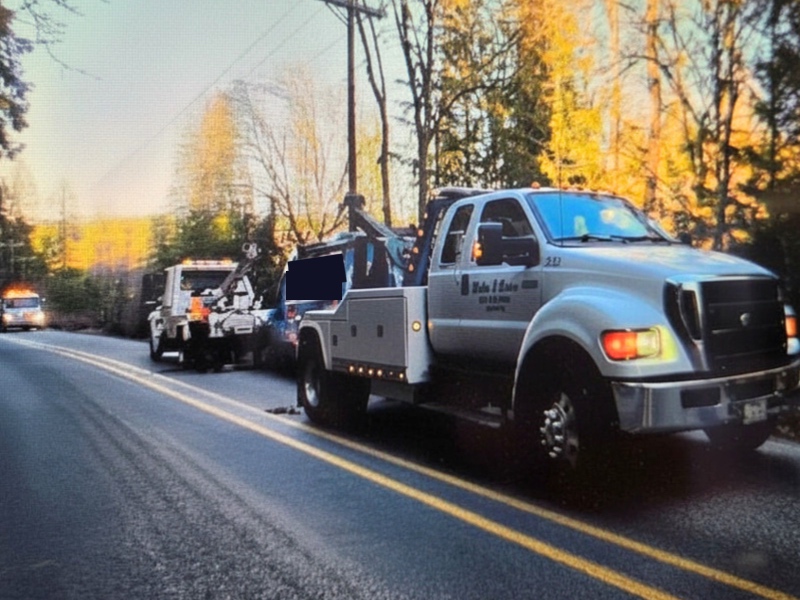
We staged two medium-duty wreckers back-to-back, each lined up to work one side of the van. That gave us the pull angle we needed without taking over the whole road. The hardest part was not the weight of the van. It was doing the work with one lane of space and cars still moving past the scene.
Why the Wheel Was the Right Hook Point
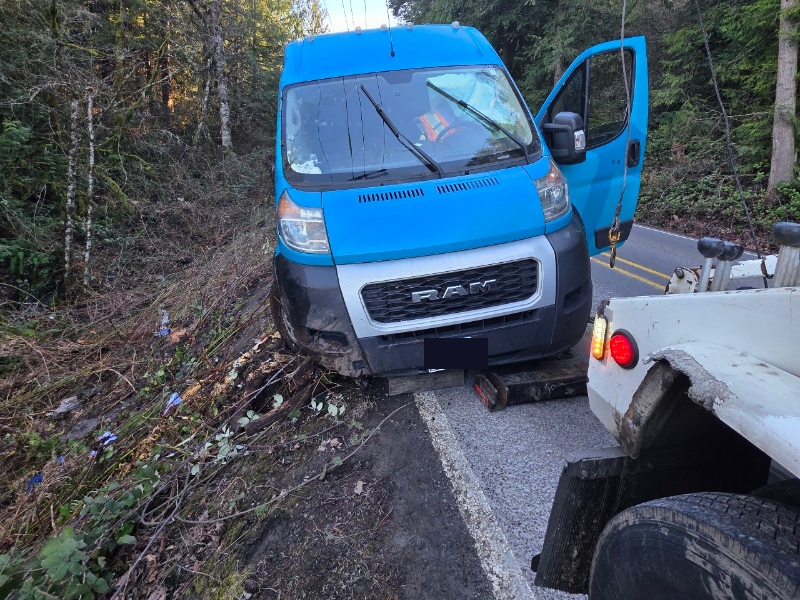
We connected the winch line to the wheel area because wheels and axle points are usually strong pull spots. After checking the rollover damage, that gave us a solid connection. We used a high pull with the booms so the wheels could dig into the dirt and help roll the van back upright instead of dragging it up the bank on its side.
Getting the Van Back Upright
The easiest part was pulling the van back toward the road. Once everything was set, that part was fairly straightforward. Good angles, steady winch pressure, and both trucks working together kept the recovery controlled.
The rollover accident recovery part took patience. We wanted the wheels to bite into the dirt, then let gravity help bring the van back onto its wheels at the right moment. Too much pull in the wrong direction can make a van twist, slide, or land hard.
A few things mattered most here:
- Keeping traffic moving through the open lane
- Holding both recovery trucks in the right position
- Pulling from strong points instead of weak body panels
- Bringing the van upright without letting it keep sliding downhill
Time Adds Up Fast on Roadside Recoveries
The full job took about 6 hours, including half an hour to set up flagging and another half hour to tear it down. A proper Colton rollover recovery service includes staging, traffic control, recovery work, cleanup, and the tow after.
This also counted as off-road vehicle recovery because the van was down the embankment, where slope, brush, and limited shoulder space slowed the work.
After the Recovery Came the Tow
Once the van was upright, we checked it, confirmed it could not be driven, and Branson handled the tow to SW Tigard Street in Portland. That fits a lot of Colton accident recovery service calls: the recovery happens in Clackamas County, then the tow may run to a shop, storage yard, or owner’s requested location.
Baker & Baker Towing Puts the Work in For Every Colton Rollover Recovery Service
At Baker & Baker Towing, a Colton rollover recovery service call like this uses more than one truck and more than one set of hands. For this job, we sent medium-duty wreckers, a flagging truck, certified flaggers, and operators who could work around a narrow road without rushing the pull. The equipment matters, but the setup matters just as much.
We’re experts in delivering excellent Colton rollover recovery service and can handle recovery and towing for vans, work trucks, passenger vehicles, and vehicles that leave the roadway around Colton and nearby rural roads. South Dhooghe Road and South Munson Road gave our Colton rollover recovery service team a good reminder of how quickly a simple tow can turn into a full traffic-controlled recovery.
FAQs
What should I do first if my van leaves the road?
Call 911 first if anyone is hurt or traffic is blocked. Stay away from the vehicle if it is near a drop-off, ditch, or utility line. A tow crew can recover the vehicle once the scene is controlled.
Why do tow companies use flaggers during a recovery?
Flaggers help manage traffic when a lane, shoulder, or roadside work area is blocked. They give operators room to work without cars crowding the scene. On narrow roads, that setup can take as long as the actual pull.
Can a rolled vehicle be pulled upright without causing more damage?
Sometimes, yes. The crew has to choose strong pull points and control the angle of the winch line. A slow pull usually causes less extra damage than dragging the vehicle across the ground.
Why would a tow truck hook to a wheel during recovery?
Wheels and axle areas are often stronger than body panels. A damaged bumper, door, or frame edge may tear loose under pressure. The operator still checks the area first before trusting it as a pull point.
How long can a recovery take after a vehicle rolls over?
Some take under an hour once the trucks are set. Others run for several hours because traffic control, cleanup, positioning, and towing all add time. Weather and slope can stretch the job too.
Can a damaged van be towed after it rolls over?
Yes, but it depends on the damage and how the van lands after recovery. The tow operator checks tires, suspension, leaking fluids, and loose parts before moving it. If it cannot roll, the crew may need extra winching or a different loading plan.